'Molecular glue' turns a cancer driver into a built-in kill switch in Stanford Medicine study
Read Full Article on Stanford Medicine News Center
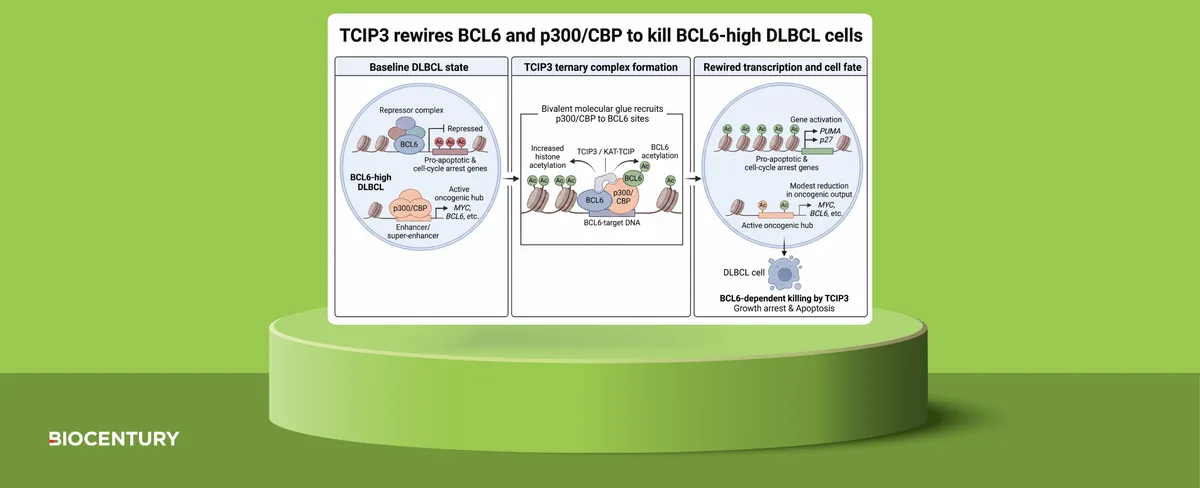
Stanford Medicine researchers, working with Deep Origin, designed a two-headed molecule that rewires BCL6 — the protein driving diffuse large B-cell lymphoma — from a growth promoter into a trigger for cell death, clearing aggressive tumors in mice within 11 days.
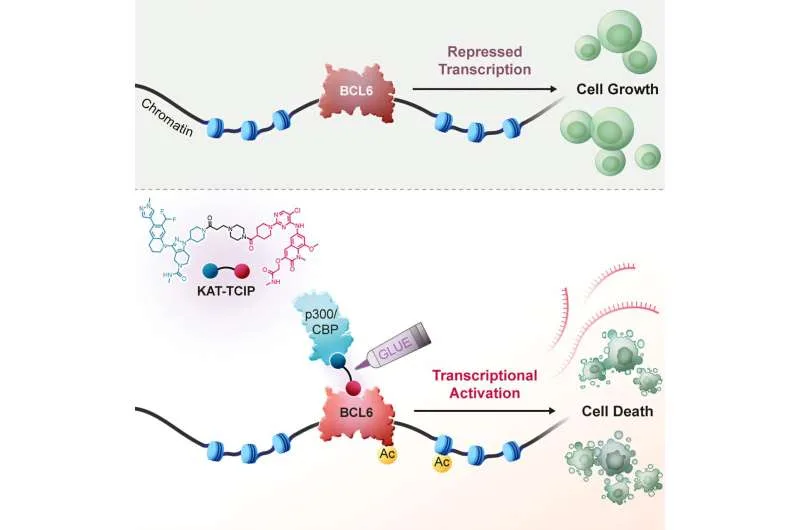
Stanford Medicine researchers, collaborating with Deep Origin and MD Anderson Cancer Center, developed TCIP3 — a bivalent molecule that physically tethers BCL6, a transcriptional repressor that drives diffuse large B-cell lymphoma, to the acetyltransferases P300 and CBP. Rather than simply blocking BCL6, the approach converts it into an activator of cell death genes, turning the cancer’s own driver into a built-in kill switch. In mouse models of aggressive lymphoma, twice-daily treatment eliminated tumors within 11 days with no observed toxicity.
Structural analysis revealed why the molecule is so potent: forcing the proteins together produced unplanned chemical contacts that further stabilized the complex, strengthening the therapeutic effect beyond what the design anticipated. The researchers believe this chemically induced proximity strategy could extend to other cancers driven by repressor proteins, and potentially to autoimmune conditions such as rheumatoid arthritis and myasthenia gravis, which also depend on BCL6-driven germinal center cells. Additional chemical refinement and preclinical testing remain before human trials.
The underlying study is available in our resource library: A bivalent molecular glue linking lysine acetyltransferases to oncogene-induced cell death.