'Molecular glue' redirects a cancer-driving protein to activate cell death
Read Full Article on Medical Xpress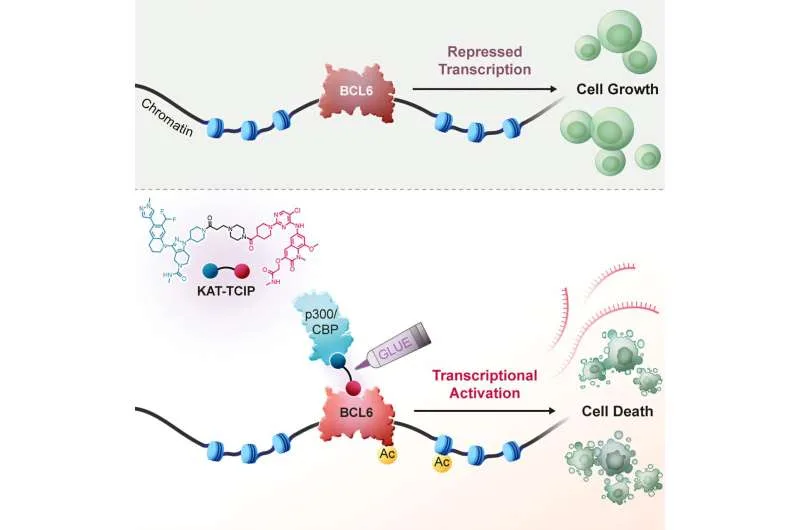
Medical Xpress covers the TCIP3 molecular glue developed by Stanford Medicine with Deep Origin and MD Anderson, which links BCL6 to P300 and CBP to switch a lymphoma driver into an activator of cell death.
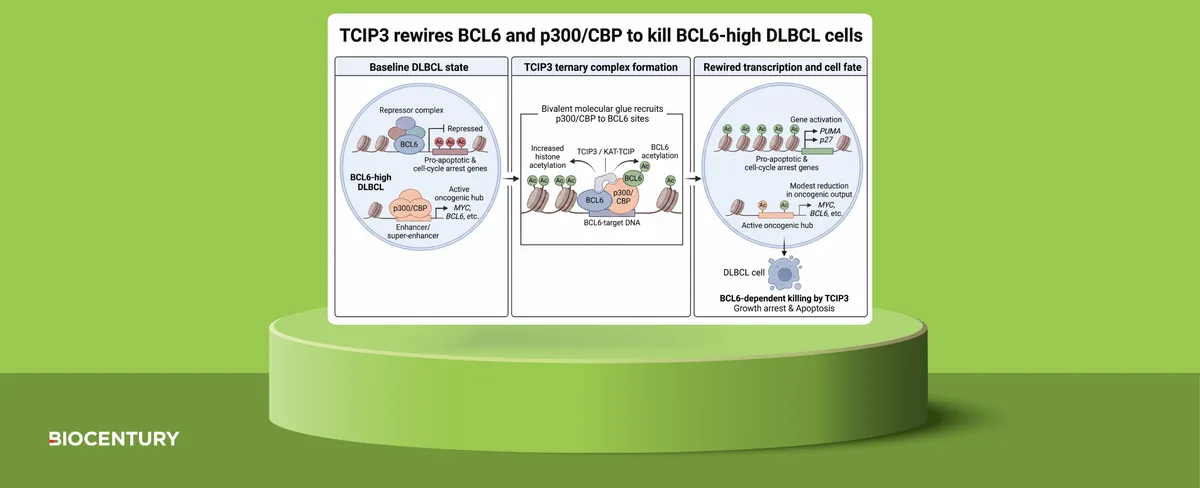
Medical Xpress reports on TCIP3, a bivalent “molecular glue” developed by Stanford Medicine researchers together with Deep Origin, described as an AI-powered drug discovery platform, and collaborators at MD Anderson Cancer Center. The molecule links BCL6 — an oncogenic repressor in diffuse large B-cell lymphoma — with the acetyltransferases P300 and CBP. Forcing the proteins into proximity triggers acetylation that both lifts BCL6’s repression of cell death genes and actively drives their expression, a dual mechanism substantially more potent than inhibition alone.
In preclinical studies, mouse lymphoma models treated twice daily showed complete tumor elimination within 11 days, with no apparent toxicity or inflammatory response. The team also identified an unexpected structural benefit: unplanned chemical contacts formed when the proteins were held together further stabilized the complex. Beyond lymphoma, the researchers suggest the chemically induced proximity strategy could apply to other repressor-driven cancers and to autoimmune conditions, since the effect on germinal center cells parallels mechanisms in rheumatoid arthritis and myasthenia gravis.
The underlying study is available in our resource library: A bivalent molecular glue linking lysine acetyltransferases to oncogene-induced cell death.